hIoTron Presents a Guide on how to become a successful IoT Developer
As IoT Technology is developing at a high pace the need for IoT Developer is also increased. As smart connected homes, cars and offices become more common more developers are required to assure that devices operate precisely and securely.
VIMAN NAGAR Pune, Maharashtra, July 14, 2020: As IoT Technology is developing at a high pace the need for IoT Developer is also increased. As smart connected homes, cars and offices become more common more developers are required to assure that devices operate precisely and securely.
Developing an IoT device goes through four processes:
Assembly of the physical hardware
This needs mostly the engineering skills to assemble the hardware.
Programming the device
This needs programming skills to understand the data from the sensors attached on the IoT device and send them to the server.
Programming the server that will receive and store the data from the device
This requires the knowledge of server-side languages such as a PHP, ASP.NET or Node.js, and database queries based on MySQL.
Displaying data to the device user
This needs web development knowledge of PHP, JavaScript, HTML, CSS, or another framework.
Tips to become a top IOT Developer
1. Acquire a clear understanding of sensors
Likewise other developers, those who work in the IoT field must have deep interpreting of sensors and wireless communication.
2. Concentrate on the user interface
When developing a commercial IoT product, it's essential to leverage yourself to high-quality standards for the user. Quality as well as reliability are uppermost to this experience and require being part of any developer's thought process.
3. Learn JavaScript or Python
JavaScript is an event-driven language and this makes it absolute for reacting to new data from devices and triggering actions on the devices themselves."
IoT developers need to utilize common languages, containing Python and JavaScript, with some Windows IoT-compatible devices using C#/.NET.
4. Get used to a Raspberry Pi
Raspberry Pi is a very inexpensive, tiny computer and is often utilized in proof of concept IoT projects. They're also the best way to learn how to solder together simple circuits and connect those circuits with software.
5. Find a community
Getting involved in the surrounding communities of makers, inventors and entrepreneurs with whom one can traverse, develop and clarify their ideas into a reality is an essential factors for becoming an IoT developer.
6. Maintain your skills cutting edge
Becoming an IoT developer means being enthusiastic about the technology, Successful IoT developers should know everything that is going on in the industry. This will give the foundation required to around with technology and make whatever is being constructed, the best it can possibly be.
Links
To know more about how to become top IoT Developer, please visit us at https://www.hiotron.com/become-iot-developer/
About hIoTron
Hiotron Pvt.Ltd (hIOTron's) provides a practical study for various IoT cloud platforms. Hiotron had deployed over 21000 IoT Devices. hIoTron's IoT platform helps businesses to connect and manage data securely.
hIOTron offers an IoT Solutions over such platforms with IoT Training in Mumbai with which you can easily come up with new ideas and techniques. Those training will be building up with the help of various techniques.
Featured Product
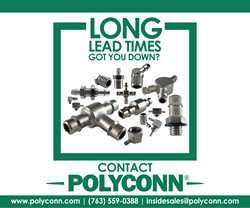
For over 25 years, Polyconn has privately labeled and manufactured customized products.
We can produce pneumatic hose and other pneumatic products to match your exact specifications. Our proficient engineering and quality management, coupled with outstanding customer service means Polyconn delivers high quality pneumatic components at competitive prices. Place your order or contact Polyconn for more information on our pneumatic hoses, pneumatic manifolds, Duratec® Pipe or any of our other top quality pneumatic products and components.