Robots That Think Before They Roll: Why Autonomous Mobile Robots Are Taking Over the Warehouse Floor
According to Global Market Insights, the AMR market was worth about USD 2.49 billion in 2025. It is expected to reach roughly USD 2.91 billion in 2026 and close to USD 9.97 billion by 2035, a compound annual growth rate of 14.7%. In other words, the market is on course to roughly quadruple within a decade.
Walk into a modern distribution center and you may notice something odd. Nobody is steering the carts. Low, flat machines glide between shelves, stop for a passing worker, and slip around a blocked aisle without a human touching a joystick. These are autonomous mobile robots, or AMRs, and they are quietly changing how goods move through the world.
A Market Climbing Fast
According to Global Market Insights, the AMR market was worth about USD 2.49 billion in 2025. It is expected to reach roughly USD 2.91 billion in 2026 and close to USD 9.97 billion by 2035, a compound annual growth rate of 14.7%. In other words, the market is on course to roughly quadruple within a decade.
The reason is simple. Businesses want to move materials faster and more flexibly, and they want to do it without ripping up their facilities to install fixed conveyor systems.
What Makes an AMR Different
Older automated guided vehicles followed magnetic strips or painted lines. If something blocked the path, they stopped and waited. AMRs work differently. They combine LiDAR, cameras, and mapping software to build a picture of their surroundings, then plan their own routes in real time. If a pallet is in the way, they go around it.
That flexibility matters because few operations stay the same for long. Seasonal rushes, new product lines, and shifting floor layouts are normal. A robot that adapts is far more useful than one that needs a rebuilt track every time something changes.
The Forces Pushing Adoption
E-commerce complexity. Online shopping means more orders, each smaller than before, and customers who expect them quickly. AMRs support goods-to-person picking, where the robot brings the shelf to the worker rather than the worker walking miles per shift. They also handle replenishment and internal transport with little fuss.
Labor costs. Warehouse wages have climbed steadily, and moving materials is a cost that never goes away. The report points to US warehousing unit labor costs reaching an index of 228.7 in 2024 (2017 = 100). As wages rise, the payback period on a robot fleet shrinks. Many operators now see automation less as an experiment and more as a standard part of how they run.
Factory flexibility. Manufacturers are making shorter production runs and mixing models on the same line. AMRs can feed components to the right station at the right moment and be redirected when the schedule changes. One notable example is ForwardX Robotics deploying 435 AMRs at Chery Automobile's plant in Dalian, spanning welding, stamping, and final assembly.
Standards that play nicely together. A growing number of buyers run robots from several vendors. The VDA 5050 protocol helps those fleets talk to the same control software, which lowers the fear of being locked into one supplier. Mobile Industrial Robots introduced an adapter for the standard in 2025, a small sign of a larger shift.
Where the Money Goes Today
Warehousing and fulfillment remains the anchor application. It accounted for about USD 1.37 billion, or 55% of revenue, in 2025. Its share is expected to ease to around 48% by 2035, not because warehousing is shrinking, but because other uses are growing faster.
Manufacturing is the standout. It is forecast to grow at 17.7% annually and reach about USD 3.19 billion by 2035. Healthcare and pharmaceuticals, a smaller segment at roughly USD 199 million in 2025, is expanding at about 17.5% a year. Hospitals use AMRs for the unglamorous work of carrying medication, specimens, linens, and waste, which frees nurses and technicians for patient care. Retail, grocery, airports, hotels, and data centers make up the rest, with smaller but steady growth.
A Global Picture
North America led in 2025 with about 40% of global revenue, roughly USD 996 million, and the United States contributed most of that. Mature e-commerce, expensive labor, and a deep bench of integrators explain the lead.
Asia Pacific, at 35% of the market, is expected to be the fastest-growing region. China is the heavyweight there, supported by huge e-commerce volumes and a dense manufacturing base. Japan is driven by an aging workforce, and South Korea by electronics and semiconductor plants that need cleanroom-friendly robots.
India deserves a close look. Its market was modest in 2025 at around USD 87 million, but it is projected to grow at 19% annually through 2035. New factories, a booming online retail sector, and government incentives for manufacturing are creating facilities that can be designed around automation from the start. For a country that is building warehouses rather than retrofitting them, that is a real advantage.
Europe holds about 20% of the market, with Germany at its center thanks to its automotive and industrial base. Latin America, the Middle East, and Africa are still early, though Brazil, the UAE, and Saudi Arabia are showing promise.
The Obstacles
The picture is not all smooth. The sticker price of a robot is only part of the cost. Buyers also have to pay for site assessments, integration, safety validation, and training. Subscription models, known as Robot-as-a-Service, are easing the entry cost, and the report notes that RaaS in transport and logistics grew 42% in 2024. Even so, outright purchase is still the dominant route, which keeps smaller companies on the sidelines.
The vendor landscape is also crowded. Companies outside the top names collectively hold about 63% of the market, which gives buyers plenty of choice but also makes long-term decisions harder. Who will still be around in ten years? Who will keep supplying parts and software updates?
Then there is regulation. Safety rules differ between North America, Europe, and Asia, so vendors face repeated certification work, and multinational buyers face headaches of their own.
Who Is Competing
Geek+ led the field in 2025 with about 17.7% share. Other significant names include ABB (through its ASTI Mobile Robotics acquisition), Jungheinrich, OMRON, Rockwell Automation's OTTO, Teradyne's MiR, and KION Group. Behind them sits a lively second tier, including Locus Robotics, Hai Robotics, Seegrid, Vecna Robotics, and Addverb, many of them focused on narrow industries.
Partnerships are becoming a theme. In December 2025, Aptiv and Vecna Robotics announced a collaboration pairing Aptiv's sensing technology with Vecna's autonomy software.
What Comes Next
The next chapter will be less about proving that AMRs work and more about making them easy to deploy. Vendors who can commission a fleet quickly, mix with other brands, and offer dependable long-term support will have the edge. Technical brilliance alone won't be enough.
If the forecasts hold, AMRs will stop being a novelty on the warehouse floor and become ordinary infrastructure, as unremarkable as forklifts and conveyors once were. The robots may not draw attention, but they will be moving much of what the world buys, builds, and uses.
Source: https://www.gminsights.com/industry-analysis/autonomous-mobile-robots-market
Featured Product
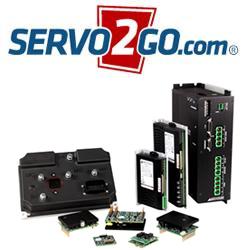
High Performance Servo Drives for localized and distributed control applications from Servo2Go.com
Engineered to drive brushless and brush servomotors in torque, velocity or position mode, Servo2Go.com offers a broad selection of servo drives in a wide range of input voltages and output power levels.