PI Establishes Innovation Hub to Strengthen Collaboration with Technical Research Institutes
This new R&D initiative will be expanded to office/laboratory clusters in the US and Asia.
Physik Instrumente (PI), the global specialist for motion control, nanopositioning technology, and high precision automation, is solidifying its affiliation and working relationships with leading universities and research institutions. A first step was made by establishing a 5,300 sqft collaboration laboratory close to the Karlsruhe Institute of Technology (KIT) and other advanced technical research institutes in Karlsruhe, Germany. "The proximity to these leading institutes promises a strong impetus for our future topics and helps us consolidate and expand our technology leadership," states Markus Spanner, CEO of the PI Group.
PI's research clusters concentrate on future competence areas and will be expanded globally in the US and Asia. "Through our competencies in nanopositioning motion control, we have firmly established PI as development and system partner in the global chip industry, in photonics, and in laser materials processing," emphasizes PI's CEO.
While companies typically emphasize product and production-related R&D, the research clusters are dedicated to future and post-future topics. "We aim to continue to be leaders in our competency areas three, five, and more years from now. The innovation hubs are a crucial component along this journey," asserts Spanner.
Industries Served
Industrial Automation, Semiconductor Manufacturing, Automotive, Silicon Photonics, Quantum Computing, High Resolution Microscopy, Life Sciences
Featured Product
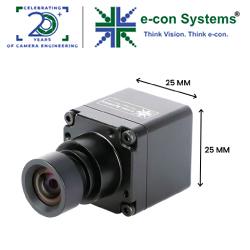
Darsi Pro - AI Compute Box based on NVIDIA® Jetson Orin™ NX
Darsi Pro is e-con Systems' rugged Edge AI compute Box powered by NVIDIA® Jetson Orin™ NX, designed for Mobility, Robotics, ITS, and physical AI applications. It delivers high-performance AI compute, supports e-con's broad camera ecosystem, and enables synchronized multi-sensor fusion for real-time perception. The Darsi Pro GMSL variant supports up to eight synchronized GMSL cameras and is compatible with NVIDIA® JetPack 6 and higher. Built with fanless design and industrial-grade enclosure, Darsi Pro is engineered for long-duty operation in harsh environments. It integrates with CloVis Central™- e-con's cloud-based device management platform for remote health monitoring, and secure OTA updates—simplifying large-scale deployment.