ReBeLMove Pro: modular robot platform for logistics, assembly and handling
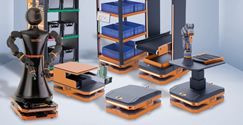
Autonomous mobile robot from igus promises simple configuration with flexible superstructures and easy commissioning
ATEC2025·Real-World Extreme Challenge Concludes with Zhejiang University Team Claiming $150,000 Prize for Breakthrough in Fully Autonomous Robotics

Thirteen global teams push the boundaries of "no remote control" robotics, driving the evolution from teleoperated tools to autonomous agents
BTM INDUSTRIAL IS HOSTING AN ONLINE SALE OF INDUSTRIAL ROBOTS ON DECEMBER 17-18, 2025
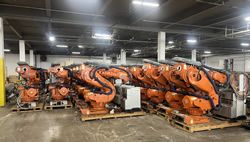
Includes more than 200 robots designed to automate tasks, such as welding, manufacturing, packaging, warehousing, and food processing. This court-authorized sale requires the liquidation of all assets, regardless of price.
SoftBank's $5.4B ABB Robotics Deal: Why IT Service Providers Should Treat Robotics as a Core Practice

As autonomy and embodied intelligence mature, IT service providers may not need to participate in every layer, but those who develop focused capabilities—whether in advisory, integration, or managed operations—will be better placed as demand grows.
Humanoid Robots to Drive Billions in Rod End Sales Over the Next Decade
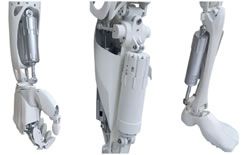
According to Goldman Sachs, the humanoid robot market is projected to reach $38 billion by 2035, with shipments surpassing 1.4 million units, driven by labor shortages and advancements in AI technology.
Automatic Visual Inspection: The Secret to Flawless Manufacturing Quality
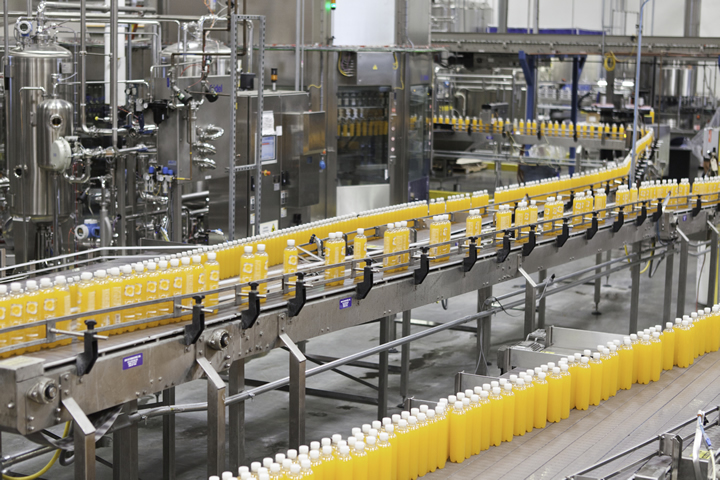
By switching to a digital inspection framework, manufacturers aren't removing the human element; they are elevating it. Instead of spotting defects, engineers can focus on fixing the root cause.
How Rapid Repair Services Are Fueling a Competitive Edge in Automation
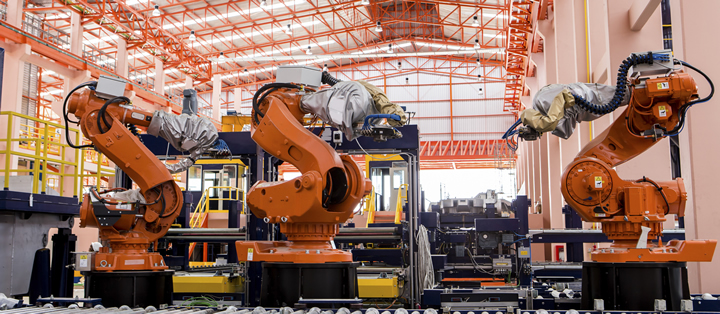
With the industrial and robotics automation industries growing rapidly, the difference between a minor delay and quarterly loss often comes down to one factor — speed. This is where rapid servo repair services become extra valuable.
Elmo Launches New Titanium Product Line and Platinum Servo Drives at SPS 2025, Redefining Limits of Motion Control
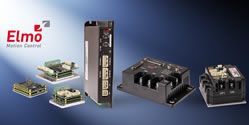
Designed to deliver exceptional performance, industry-leading compactness, and advanced high-end technology, built for demanding industrial and harsh-environment applications.
UBTECH Humanoid Robot Walker S2 Begins Mass Production and Delivery, with Orders Exceeding 800 Million Yuan
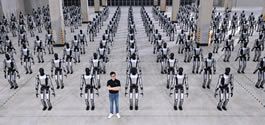
By establishing a closed-loop commercial cycle—from technology and real-world application to delivery and iterative improvement—UBTECH has developed core capabilities to rapidly address market demands and efficiently secure and fulfill orders
Explosion-Proof Robotics in ATEX/IECEx Environments: Progress, Challenges and Practical Pathways

Industrial robotics has transformed manufacturing, logistics and maintenance across countless sectors. Yet in potentially explosive environments such as refineries, petrochemical plants, offshore platforms and battery production facilities, the picture changes dramatically.
Q&A with Uncrewed & Autonomous Systems 2025
The agenda covers a wide range of critical themes. Sessions will examine the operational integration of uncrewed systems, with case studies on how UAS and UGVs are being deployed in real-world missions. Another focus is on AI, autonomy, and the digital backbone
Mission-Critical Automation: Ensuring Uninterrupted Operations Through Robust Power Management

Seamless power management requires careful planning and leveraging many technologies and techniques for oversight. What does this involve, and what does each strategy contribute to improving a facility's energy use?
Nike Unveils Project Amplify, the World's First Powered Footwear System for Running and Walking
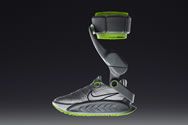
Still early in testing, Nike is blending art and science to reach performance readiness,?working alongside robotics partner Dephy to bring the footwear system to a broad consumer launch in the coming years.
First Autonomous Mobile Robots Roll Off the Line at Rockwell Automation's Milwaukee Headquarters
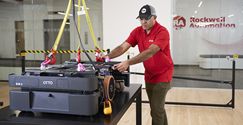
he milestone marks a significant step for OTTO by Rockwell Automation, part of the company's 2023 acquisition of Clearpath Robotics, and reinforces Rockwell's commitment to advancing smart manufacturing through automation.
What Role Does Robotics Play in the Manufacturing Supply Chain?
.jpg)
Robotics has moved from "point fixes" on isolated stations to the connective tissue of the entire supply chain. In practical terms, that means robots are continuously progressing from just weld or pick.
Records 1 to 15 of 1670
Featured Product
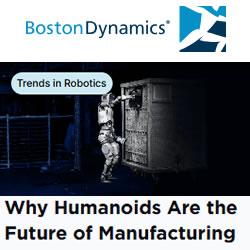
Boston Dynamics Webinar - Why Humanoids Are the Future of Manufacturing
Join us November 18th for this Webinar as we reflect on what we've learned by observing factory floors, and why we've grown convinced that chasing generalization in manipulation—both in hardware and behavior—isn't just interesting, but necessary. We'll discuss AI research threads we're exploring at Boston Dynamics to push this mission forward, and highlight opportunities our field should collectively invest more in to turn the humanoid vision, and the reinvention of manufacturing, into a practical, economically viable product.
Robotics and Automation - Featured Company

Zimmer Group US, Inc.
Are you interested in premium products in the fields of mechanical and plant engineering? Do you want to learn more about our solutions in the fields of automation, damping, linear, processing, tooling, and machine tooling technology?