How will the drive actually behave in the real-life application? For brushless DC-motors from FAULHABER, this question can be answered without any hardware whatsoever.

Testing drive systems virtually -  Simulink library for development and digital twin.
Testing drive systems virtually - Simulink library for development and digital twin.

Article from | FAULHABER

How will the drive actually behave in the real-life application? For brushless DC-motors from FAULHABER, this question can be answered without any hardware whatsoever. They were recently added as virtual modules to a library and can be integrated into modeled applications using the simulation software Simulink. The simulated behavior serves as an indicator for the real-life situation. It takes just a few clicks to "try out" different drives. This makes the development process much easier.
Let us take a transport drone used in logistics as an example. Its drives need to meet high dynamic demands to enable precise and responsive control of the flying object. They must respond without perceivable delay, smoothly and with precisely defined force. Motors that drive such high-precision applications therefore have to meet very high expectations.


Saves time and reduces risks

The transport drone is just one of many application examples for which simulation of the drive system during the development phase constitutes a valuable tool. What matters here is not only the behavior of the motor, which can be modeled with reasonable effort based on the data sheet parameters. A complete drive system also requires emulation of the sensor system and control. Realistic emulation of these components helps reduce comprehensive trials with physical drives.
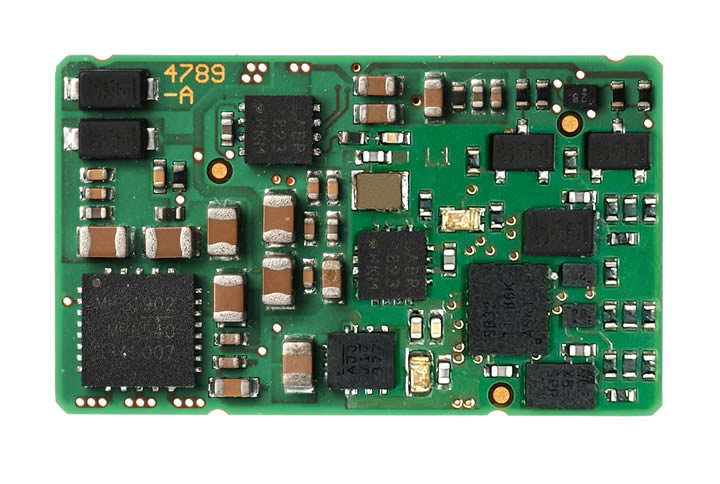
FAULHABER is the first provider of high-quality micromotors to offer the possibility of simulating the application situation realistically at an early stage of development. This is supported by a simulation software that is used by many developers all over the world: Simulink offers a so-called block diagram environment with graphical interface in which simulations with virtual models are possible without the need for programming. "Various solutions can be tested quickly and easily in an integrated environment. This allows the development concept to be adapted to the actual application at a very early stage," explains applications engineer Marc Lux.


Integrating sensor system and control
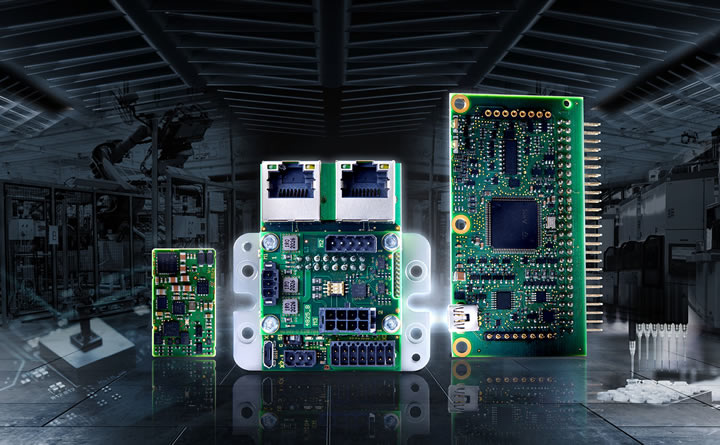
He himself created the basis for testing FAULHABER drives using Simulink. He compiled a component library in which all brushless DC-motors in the product range are stored together with the matching encoders and Motion Controllers. "A motor consists of an electrical and a mechanical subsystem. The correlations can be described using mathematical equations. In the model, the equations for the subsystems are interconnected, just like the components when assembling a physical motor."
By modeling typical influences of various sensor systems, it is possible to simulate a realistic speed characteristic. The drive models can also be used by customers to develop their own controllers for actuating brushless FAULHABER motors. Although this is no substitute for tests on physical motors, this model-based method significantly reduces the time and risks associated with development.
For simulation of a controlled drive system with FAULHABER components, the library provides modules for torque, speed and motion control. Motion Controllers of generation 3.0, which include e.g. the models MC 3001, MC 3603 and MC 5005, form the basis. In combination with a motor from the library and a configurable load inertia, the same controller parameters can be determined as those that exist in a physical Motion Controller. By simulating the complete drive system, it is possible to, for example, establish realistic positioning times, adapt the controller parameters or compare the behavior of the drive when different concepts are applied.


Practical toolbox
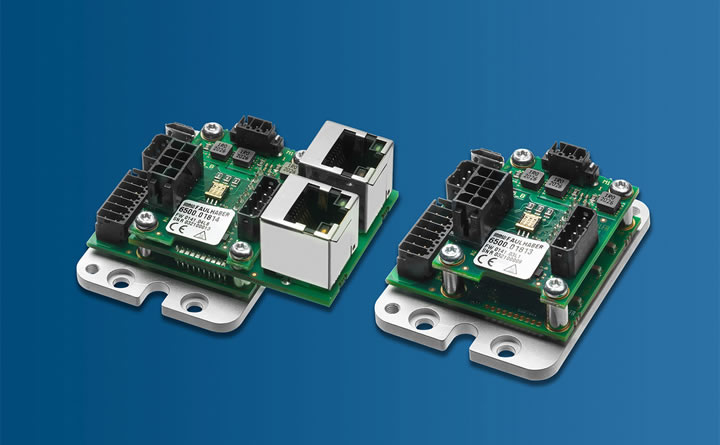
To make the simulation easy to use, Marc Lux developed a Matlab toolbox. Matlab is a platform for programming and numeric computing. Scripts created using this platform can be used for simulation with Simulink. The virtual toolbox contains, among other things, the various drive models, scripts and tables for calculating parameters for the controllers and motors as well as graphical interfaces for intuitively combining the elements required for the simulation.
The Simulink library has been available online to FAULHABER customers since the beginning of the year. It is intended to supplement existing tools such as the FAULHABER Drive Calculator. It can be used for selecting a drive system as well as for model-based integration into the actual application. Not least, the simulation can also be used for creating a digital twin of the drive and to utilize this twin for advanced features in the context of IoT and Industry 4.0.
 
The content & opinions in this article are the author’s and do not necessarily represent the views of RoboticsTomorrow

Featured Product
Nion: Next-level time-of-flight

Nion: Next-level time-of-flight

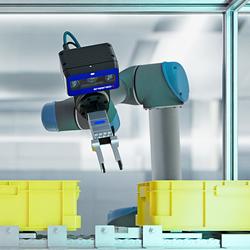
The new Nion 3D camera advances Time-of-Flight (ToF) technology with exceptional resolution, speed, and industrial robustness. Designed for demanding applications such as logistics, warehousing, industrial automation, and robotics, Nion delivers high-resolution depth data with real-time performance for faster, safer, and more flexible operations. At its core is the 1.2-megapixel Time-of-Flight sensor AF0130 from onsemi's Hyperlux ID family, offering up to four times the resolution of conventional VGA-based ToF cameras and significantly higher data density. Active 940-nm laser illumination ensures accurate and stable measurements in low-light conditions, artificial lighting, and even direct sunlight. With an IP67-rated housing, Nion is built for reliable operation in dusty, wet, and thermally challenging industrial environments. A user-friendly API with IDS peak support and compliance with the GigE Vision standard enable fast integration and flexible deployment in high-resolution 3D applications. The Nion 3D camera is now available from IDS Imaging Development Systems.