Robotics for end of line automation: RB-KAIROS+
The end-of-line is the last stage of the production process, where finished products go through final operations before being stored or distributed. Some examples of end-of-line tasks include quality control, parts handling, packaging, labeling, or order picking. Combining the advantages of an AMR with those of a robotic arm results in end-of-line robots such as RB-KAIROS+, capable of moving around an infrastructure, handling objects autonomously and performing various end-of-line tasks with high efficiency and flexibility.
🟥What end-of-line tasks can robots perform?
🔺Robotics for quality control: RB-KAIROS+ can measure and verify parts by detecting defects or imperfections with greater precision than a manual inspection. This autonomous visual inspection is achieved through artificial vision, cameras or ending tools such as OnRobot Eyes.
🔺Robotics for handling and sorting parts: Another common end-of-line task is collecting parts from conveyor belts or workstations and placing and sorting them in designated locations for distribution or storage. For a correct classification, robots are based on parameters such as size, color or QR code.
🔺Robotics for packing: Packing requires precision and reliability to guarantee that the product does not suffer damage in the handling process for packaging. RB-KAIROS+ can stack boxes or products weighing up to 16 kg, depending on the Universal Robots arm it integrates. Here you can check the 3 available options.
🔺Robotics for line replenishment: Replenishment of stations or production lines is also a recurring need. An autonomous mobile manipulator can execute Pick and Place to replace missing materials or tools, saving operators the loss of time that this process entails.
🔺Robotics for post-processing: Tasks such as labeling or marking can be the previous step to distribution. Polishing can also be considered a post-processing task that manipulators perform on metal or plastic parts, removing sharp edges or irregularities.
🟥5 Advantages of robotics in end-of-line tasks
The adoption of autonomous mobile manipulators offers numerous benefits for industries seeking to optimize their end-of-line operations.
🔺Operational Efficiency: Mobile Manipulators automate these repetitive tasks, reducing cycle times and allowing workers to focus on higher-value activities.
🔺Flexibility and Scalability: While a fixed robot will always be able to execute a task in the same location, RB-KAIROS+, thanks to its mobility and modularity, can operate in multiple locations, adapting to the different needs of the production line.
🔺Quality Improvements: High-precision sensors and cameras ensure consistent inspections and avoid human errors, increasing quality standards.
🔺Cost Reduction: Although its implementation requires initial investment, end-of-line robotics reduces long-term costs in terms of material waste and errors in production.
🔺Connection with Industry 4.0: These robots are compatible with IoT systems and management platforms, allowing remote control and full integration into smart factory ecosystems.
🟥Industries that use end-of-line robotics
End-of-line robotics are used in various industries such as automotive, aeronautics, electronics or pharmaceuticals. These are some of the tasks that robots like RB-KAIROS+ can execute in each sector:
🔺Robotics in automotive: On vehicle assembly lines, manipulator robots inspect critical parts, handle heavy components or supply spare parts to workstations.
🔺Robotics in the electronics industry: RB-KAIROS+ can handle small parts with great precision, perform quality tests and assemble sensitive components, typical of the electronics industry.
🔺Robotics in the food industry: Also in the food industry there are recurring end-of-line tasks that robotics can automate: hygienic product packing, container sorting or automated palletizing.
🔺Robotics in the pharmaceutical industry: The pharmaceutical industry uses end-of-line robots to inspect containers, label products or prepare batches for distribution, meeting regulatory standards.
🔺Robotics in the aeronautical industry: The production process in the aeronautical industry is, perhaps, one of the most complex that exists. End-of-line robots are of great help in executing tasks ranging from screwing aircraft wings or parts, supplying delicate components such as electronic circuits or sensors, to tasks related to quality control such as three-dimensional measurements and analysis of tolerances.
Robotnik supports you throughout the entire end-of-line automation process. Ask us with no obligation.
Featured Product
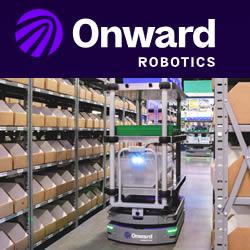
Onward Robotics - Meet Lumabot®
An interactive and powerful autonomous mobile robot for order fulfillment. Lumabot AMRs boost picking productivity and their human counterparts, intelligently moving material to the right person at the right time