5 ways to advance robotics in manufacturing
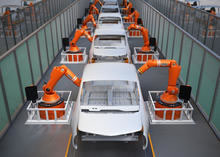 Stephanie Condon for ZDNet: There's strong demand in the business world for robotics, and high-profile examples of commercially deployed robots -- take Amazon's Kiva, for example -- suggest a robot revolution is just over the horizon.
However, the automated tools that could be used in warehouses and on factory floors have a long ways to go before they can help transform American manufacturing, according to Howie Choset, a professor at Carnegie Mellon University's Robotics Institute and CTO of the Advanced Robotics for Manufacturing Institute (ARM) in Pittsburgh.
In technology R&D, researchers use Technology Readiness Levels (TRL) to discuss whether something is still in the basic and applied research stage (TRL 1 or 2), ready for commercialization (TRL 9) or somewhere in between.
"At what TRL are we with AI and robotics, insofar as it takes to implement or deploy robots in manfuacturing? The answer is, we're everywhere," Choset told ZDNet. Full Article:
Featured Product