ADAR stands out by combining full-3D sensing via ultra-sound, strong safety credentials, cost efficiency and ease of integration. This is enabling robots to safely work in closer proximity to people and in tougher environments than many existing solutions.
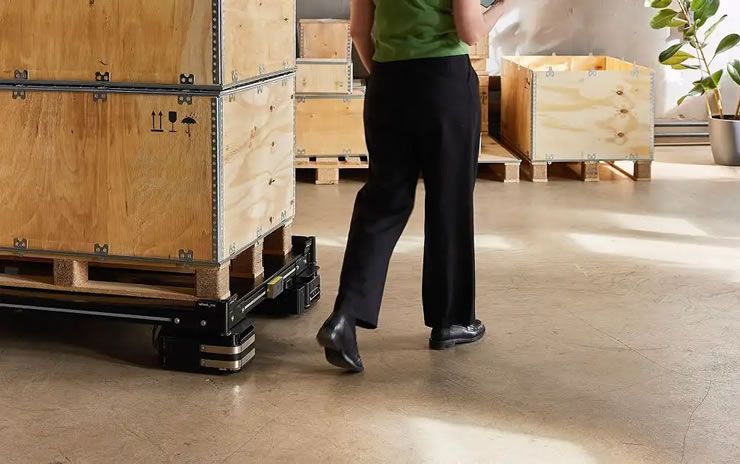 Sonair's ADAR 3D Ultrasonic Sensor
Product Q&A with Sonair | Sonair
Tell us about your product and what you feel sets it apart from similar products.
Sonair’s flagship product, the ADAR 3D ultrasonic sensor, is designed to bring a step-change in how autonomous machines perceive their surroundings. Traditional sensors for mobile robots often rely on 2D scanning (for example horizontal LiDAR) or camera-based systems that require good lighting, clean surfaces, and clear lines of sight.
At Sonair, we’ve developed a breakthrough ultrasonic sensing system that “listens” to its environment rather than only “seeing” it. This gives a number of advantages:
- Where other sensors might struggle (in darkness, around reflective or transparent surfaces, in dusty or humid environments), ADAR remains robust.
- With ADAR we support full 3D awareness: a 180° × 180° field of view vertically and horizontally, enabling robots to detect obstacles or people not just at leg level but full height.
- From a cost and integration perspective, we’re targeting a significantly lower bill-of-materials, less complexity and easier integration than many optical or LiDAR stacks. We estimate up to 50% savings vs. typical safety-certified 2D LiDAR solutions.
- We’ve built the product from the ground up with safety in mind, meeting performance levels like PL d / SIL2 for safety-critical applications.
In short: ADAR stands out by combining full-3D sensing via ultra-sound, strong safety credentials, cost efficiency and ease of integration. This is enabling robots to safely work in closer proximity to people and in tougher environments than many existing solutions.
Tell us about the R&D behind this product. Who is this product designed for? What problem is it solving?
Sonair’s R&D work has its roots in patented deep research at SINTEF (a leading research institute in Norway) in MEMS and ultrasonic transducers. The founding team brought together strong expertise in ultrasound, MEMS, acoustics, safety certification, and embedded software. The core problem we set out to solve is: how do we make autonomous mobile robots and other machines able to safely share space with humans, in practical, cost-effective ways, and in the real operational contexts found in logistics, manufacturing, retail and service robotics.?
Key design goals included:
- Robust sensing even in challenging environments (dust, light changes, wet floors, reflective surfaces)
- Full coverage (no blind spots) so that robots aren’t limited to single-plane detection
- Safety certification and configurability, so that integrators and OEMs can build trusted solutions
- Lower cost and simpler integration, reducing time-to-market and cost barriers for robot builders
Our target users are primarily autonomous mobile robot (AMR) manufacturers, system integrators and machine builders that operate in mixed-human/robot environments: warehouses, factories, commercial cleaning robots, retail robots, hospitals and so on.
In essence: We’re solving the “safety + perception” challenge for human-robot collaboration, making it easier, cheaper and more robust for machines to operate safely in dynamic, real-world spaces.
Give us an idea on the installation process.
Although we tailor installation to the specific robot and use-case, the process with ADAR is designed to be as straightforward and OEM-friendly as possible.
Here is a typical workflow:
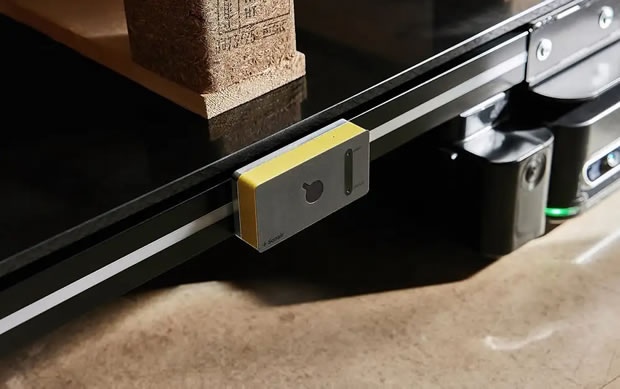
1. Mounting the sensor unit: The sensor’s compact form factor allows flexible mounting on the robot top, front or other optimal location. Our design anticipates low profile heights (important for robots that go under carts, shelves etc).
2. Wiring and connectivity: The sensor supports industry-standard interfaces (power, communication) and is plug-and-play to a large degree. The aim is minimal disruption to the robot platform.
3. Configuration of safety zones: Through our software/configuration tools, integrators can define up to 128 configurable zones for perception and safety monitoring. This allows fine-tuned detection surfaces and behaviour.
4. Integration into the robot’s control system: The sensor delivers real-time data (distance/position of objects/humans) which the robot’s control system uses for path planning, obstacle avoidance or safe stop mechanisms.
5. Testing and safety commissioning: Before full operation, the system is calibrated and tested for performance in the specific environment (reflective surfaces, height restrictions, moving humans). Because we pursue safety certification (PL d / SIL2) the installation includes validation of safety behaviour.
6. Deployment & monitoring: Once installed, robots can start operating with the sensor. In many cases the integrator has remote monitoring and logging of sensor performance, and our team supports tuning for optimal coverage, sensitivity and robustness. Because we designed ADAR with ease of integration in mind, many customers comment that the sensor is “plug-and-play” and integrates faster than legacy systems.
How is your company set up to support the users of your products?
At Sonair we recognise that supplying the hardware is only one part of the solution, enabling and supporting our customers is equally critical.
Here is how we structure our support and service model:
- Dedicated customer success & application engineering teams: We have engineers specialised in robotics integration, safety standards, and sensor configuration who work directly with OEMs and integrators from pilot to volume deployment.
- Early Access / pilot programmes: Prior to full deployment, we engage customers in early access programmes, gather feedback, tune our product, and help them validate integration and performance in their real environments.
- Documentation, training & configuration tools: We provide thorough documentation (hardware installation, software/API, safety guidelines), training sessions for integrators and system engineers, and software tools for configuration of detection zones, calibration and diagnostics.
- Global support and field service: Given our ambitions to serve global robot manufacturers, we maintain support coverage (remote and local as required) to handle queries, firmware updates, calibration issues or performance tuning.
- Safety and certification assistance: Since our sensor is designed for safety-critical applications (PL d / SIL2), we help our customers with compliance documentation, certification pathways, and integration of safety behaviour in their systems.
What feedback have you received from the field? Can you share a use case and the results?
We have received encouraging feedback from our early testers and pilot customers, which helps validate our value proposition and also highlights areas of further improvement. Many OEMs emphasise that “safety matters.” They are looking for sensors that enable robot/human collaboration but that also simplify certification and system design. Cost remains a key metric: Integrators told us that the sensor pack of a robot can constitute ~30 % of the total bill-of-materials, so reducing sensor cost and complexity is a meaningful differentiator. Form factor and low mounting height are highlighted as important, for robots that navigate under obstacles or in low-clearance environments. Sonair’s low-profile design is seen as a plus. Robustness and the ability to detect close objects (within 5-20 cm) as well as full height obstacles help address “blind spot” issues in 2D scanning systems.
Use case example: One publicly referenced customer is FUJI Corporation in Japan, which is integrating ADAR in autonomous mobile robots for retail/warehouse environments.
They said: “Through comprehensive testing we were able to confirm the high suitability of Sonair’s sensors for autonomous mobile robots.” The robot will operate in a retail/warehouse environment with mixed human traffic. With ADAR installed, the robot gains full 3D perception of people and obstacles, improving safety margins and reducing blind-spot risk compared to legacy 2D scanning.
The content & opinions in this article are the author’s and do not necessarily represent the views of RoboticsTomorrow
Featured Product