Once a robot can move between floors without any changes to existing building infrastructure, operators get immediate ROI by freeing staff from repetitive delivery work while improving speed and convenience for residents and guests.
 Fully Autonomous Deliveries inside Multi-floor Buildings without Elevator APIs
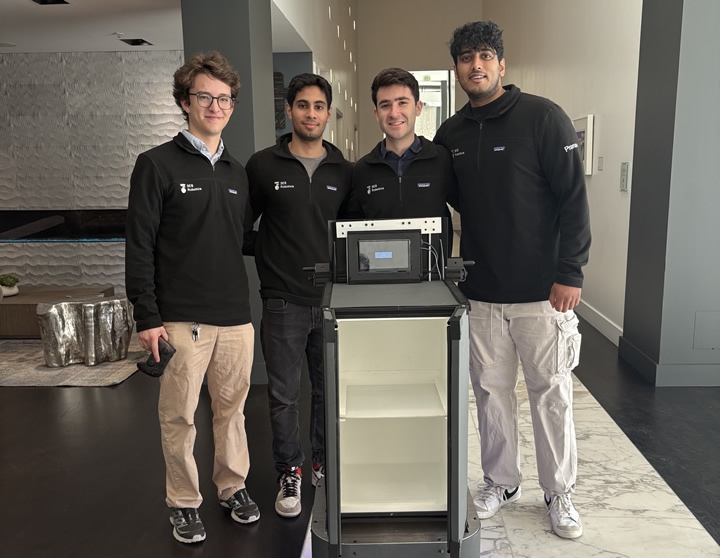
Q&A with David Feldt, CEO & Sajeel Purewal, COO | 3E8 Robotics
Tell us about yourself and the 3E8 Robotics team.
David: I’m the CEO of 3E8 Robotics, where I lead our system architecture, technical strategy, and the design of our multi-floor autonomy stack. I come from Mechatronics Engineering at the University of Waterloo and have a background in embedded systems for automotive environments, places where reliability isn’t optional. I’ve always gravitated toward building electromechanical systems that work in unstructured, high-variability real-world settings.
Sajeel: I’m the COO of 3E8 Robotics, where I lead our operations, deployments, and go-to-market strategy. I studied at Queen’s University and previously worked on the Strategy and Operations team at an investment bank. My focus has always been on how technology fits into complex, human-centered environments, and at 3E8 I work to ensure our robots deliver reliable, scalable value in hotels, residential towers, and other multi-floor properties.
David: 3E8 Robotics was founded alongside our Co-Founders Ari Wasch (CTO) and Pranav Seelam (CSO), who bring deep expertise in robotics hardware, firmware, autonomy engineering, and computer vision. Our work began in Toronto before we were selected for Founders Inc.’s accelerator program, after which we secured early funding from them and several angel investors. Since then, we’ve demoed at some of the largest condo buildings in San Francisco, generated over 440K views on our launch video, and secured pilot agreements scheduled for 2026. As a team, we’re united by a mission to build practical, human-centered robots that make everyday environments more efficient.
What specific technical or operational challenges in indoor delivery robotics inspired you to found 3E8 Robotics, and how did each of you identify a need for a new approach to autonomous indoor delivery?
Sajeel: From the operational side, I realized quickly that the real barrier to indoor delivery robots in North America wasn’t autonomy, it was the buildings themselves. Conversations with hotels, condos, and property managers revealed the same issues: no elevator APIs, heavy delivery traffic, and regulations that make elevator retrofits impractical. Those insights made it clear that existing robots couldn’t scale because they aren’t designed for North American infrastructure. That reframed the challenge for us as an infrastructure mismatch rather than a robotics limitation, and it highlighted a major opportunity: if we could solve elevator access without complex building infrastructure changes, we could unlock a market that had been closed to automation. That insight shaped the direction of 3E8 from day one.
David: This led us to design a custom elevator-poking mechanism capable of pressing buttons like a human. To behave reliably in real-world environments, a robot needs to handle dynamic situations, different elevator layouts, varying building designs, and crowded spaces. Getting a robot on and off an elevator in real time demands precision, timing, and high reliability. Our belief is that if a robot can autonomously navigate tall buildings, it unlocks an entirely new layer of indoor autonomy.
One of your core breakthroughs is enabling robots to physically press elevator buttons without API integrations. Can you walk us through how that innovation works and why it represents a significant step forward for autonomous indoor robots?
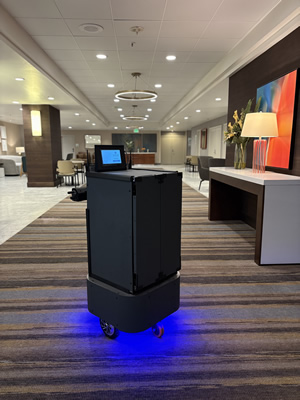 Sajeel: From a deployment standpoint, the breakthrough is that our system requires no changes to the building at all. By enabling robots to physically press elevator buttons like a human, we can operate in virtually any property without APIs, retrofits, or infrastructure upgrades. Staff no longer need to wait months or spend thousands to make their elevators “robot-ready”, a robot can begin operating the same day it arrives. For property teams accustomed to long, complex deployment cycles, that’s a dramatic shift. We believe this level of plug-and-play autonomy will quickly become the new standard for multi-floor service robots.
David: Our hardware focus is building a low-cost actuator that can locate and press any button from elevator panels to keypads to wheelchair door openers. Paired with this is our building-profiling system, which lets us operate in any building with no technician required. All movement and pressing decisions run on-device using AI, enabling real-time, dynamic responses to any situation. Today, very few deployed robots use manipulators that reliably interact alongside humans, and we believe our poking mechanism will become the most widely deployed solution in the industry.
You’ve already completed demos in major San Francisco high-rises and secured multiple hotel and condo pilots. What have been the biggest learnings from those real-world deployments, and how have they influenced your current robot design?
Sajeel: Through our demo’s across some of SF’s tallest high-rises, we’ve learned how significant the delivery burden is for large buildings; a 350-unit condo can see over 100 deliveries a day, most of which never reach resident floors due to security restrictions around letting couriers access resident floors. In hotels, the takeaway was the clear ROI from freeing staff from routine delivery runs. We also saw how important a frictionless user experience is; unlike in parts of Asia where service robots are common, North American residents and guests aren’t accustomed to interacting with them, so the system has to feel effortless. These insights directly shaped how we design the robot’s behaviors, communication flows, and deployment playbook to ensure adoption is seamless from day one.
David: In real-time environments, it’s impossible to fully predict or prepare for human behavior. Our algorithms must handle variations in sensor inputs, from a blocked camera to lifted wheels or a covered LiDAR. We design the robot to operate around the clock, autonomously recharge, and require no human intervention. Our goal is to make using the robot feel as simple as having an assistant handle a delivery for you. The robot’s appearance and behavior are equally important, as they define our company and the experience we bring to the world.
What makes multi-floor indoor environments such a uniquely hard robotics problem, and what misconceptions do people often have about automating deliveries inside buildings?
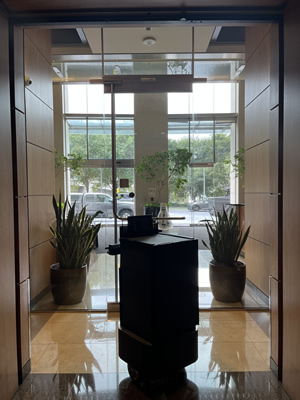 Sajeel: A common misconception is that indoor delivery robots are already a solved problem, when in reality multi-floor buildings in North America are incredibly complex, human-operated environments. Every property has different elevator rules, access-control setups, staff workflows, and traffic patterns, and these variables change throughout the day. People often underestimate how much operational coordination is required. Moving between floors isn’t just a technical challenge, it’s a workflow challenge involving security protocols, guest expectations, and timing windows that robots must adapt to. The unpredictability and heterogeneity of real buildings make them fundamentally different from more controlled environments like warehouses or single-floor deployments. Understanding this early on shaped our approach and we focused on designing a system that fits into existing building operations rather than expecting buildings to adapt to the robot.
David: People often overlook how much time is wasted in elevators, especially in tall buildings. If a delivery takes 6 minutes round-trip, then 80 deliveries consume 8 hours of human time per day, most of which is spent waiting in elevators. Most elevators also block cell signals, meaning a robot must run fully offline and make decisions autonomously. Many assume it’s easy to “just add a control board, it's only a Raspberry Pi,” but the hard part isn’t the hardware. It’s getting a technician, securing approvals, and modifying the elevator, a process that’s costly, slow, and often impractical. Our approach avoids these hurdles by offering a dramatically cheaper, non-invasive solution that can be deployed in any building with no friction.
Looking ahead, how do you see this new elevator-interaction capability expanding the capabilities of service robots across hotels, residential towers, hospitals, and beyond?
Sajeel: We see elevator interaction enabling buildings to redirect staff toward higher-value, guest-focused work by offloading room-service runs in hotels, package delivery in condos, and supply transport in hospitals and corporate campuses. Once a robot can move between floors without any changes to existing building infrastructure, operators get immediate ROI by freeing staff from repetitive delivery work while improving speed and convenience for residents and guests. At scale, this transforms how buildings design their workflows, with robots handling the routine movements that keep a property running. Ultimately, our vision is a future where autonomy quietly empowers humanity, where robots lighten our burdens, extend our capabilities, and give people back the most precious resource of all: time.
David: Once this robot is widely deployed, we plan to expand into other areas where robots naturally belong. By adding arms to this platform, a robot can pick up, manipulate, and move objects indoors, unlocking applications in factories, kitchens, and labs. We believe robots will automate every aspect of indoor labor, and we’re driven by the idea of seamless human–robot interaction. Our goal is to be the pioneer that defines this future.
3E8 Robotics was founded around a simple belief: robots should make everyday life better not someday, but today. Our work began in Toronto before completing Founders Inc.’s accelerator program, after which we received funding that helped us land early pilots across San Francisco. We’re a venture-backed team of roboticists, engineers, and operators with deep experience in AI, hardware, autonomy, and deployment, united by a mission to bring practical, scalable, task-specific robots into the real world
The founding team includes David Feldt (CEO), who leads product and technical strategy; Sajeel Purewal (COO), who oversees operations, pilots, and customer partnerships; Ari Wasch (CTO), who directs hardware and software development; and Pranav Seelam (CSO), who leads AI and autonomy software. Together, the team is building toward a bold vision: a world where purpose-built robots are woven into everyday life; accessible, trusted, and everywhere.
The content & opinions in this article are the author’s and do not necessarily represent the views of RoboticsTomorrow
Featured Product