Walmart is using shelf-scanning robots to audit its stores
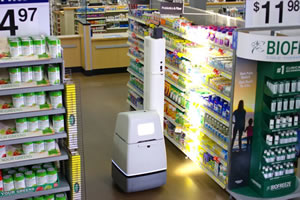 James Vincent for The Verge: Robots are already a common sight in warehouses (Amazon alone use more than 45,000) but now they’re moving into stores too. Walmart has announced it’s deploying shelf-scanning bots in 50 locations around the US, using the machines to check things like inventory, prices, and misplaced items. The retailing giant says the robots’ introduction won’t lead to job losses, and that the company wants to save employees from carrying out tasks that are “repeatable, predictable, and manual.”
The robots themselves are produced by California-based Bossa Nova Robotics, and are about two-feet tall with an extendable tower containing lights and sensors for scanning shelves. They sit in recharging stations in the store until a human employee gives them a “mission” — e.g. checking a particular aisle to see what needs re-stocking. The robots are supposed to save workers’ time, but Walmart says it will also use the data they collect to improve efficiency nationwide.
"If you think about trying to go through a facility with all these different [items] and figure out if your prices are accurate, it can be very time-consuming,” John Crecelius, Walmart’s vice president of central operations, told the Arkansas Democrat-Gazette. “From our perspective, when you're doing things like this you're trying to improve your service to your customers and trying to make things simpler and easier for your associates at the same time.” Full Article:
Featured Product