The Hiring Freeze Came First. The Robots Came After.
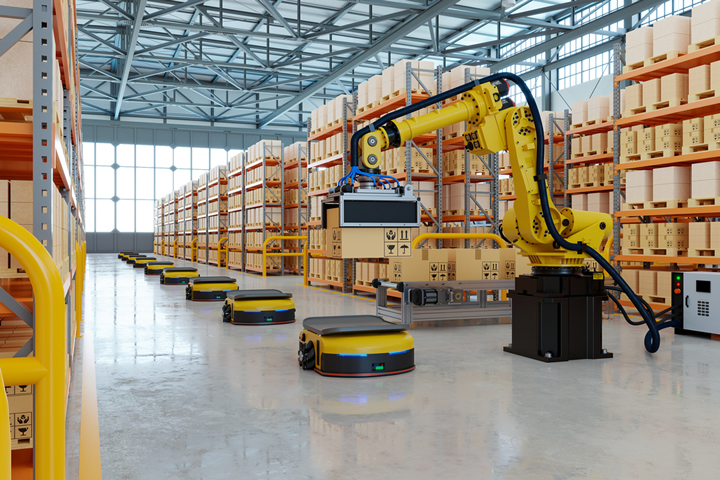
Walk onto a warehouse floor, and the national debate about “robots taking jobs” feels out of touch. Operators aren’t wondering how to manage too many people. They’re wondering how to keep up with too few.
This is not just a vibes-based assessment: in May, the U.S. reported around 332,000 open jobs in transportation, warehousing, and utilities, plus another 400,000 in manufacturing. Wages are up, benefits are better, yet demand still outpaces supply. Immigration limits and demographics tighten the pool further. Employers are left scrambling to fill shifts that stay empty.
So where have all the workers gone? Demographics and policy tell part of the story. The foreign-born share of the U.S. labor force ticked up nearly 20% in 2024, but immigration tightening has made labor supply more volatile in sectors that depend on physical labor, from agriculture to logistics. Several analyses warn that shrinking inflows of workers will keep pressure on hiring and prices unless productivity rises.
In other words, the labor pool isn’t expanding fast enough to match the economy’s appetite for movement. This is where the prevailing narrative breaks down, and the real paradox is revealed.
The Real Paradox
Yes, AI is on the rise, and the job market is challenging for many, with high-profile layoffs in tech, consulting, and retail dominating headlines. But in logistics and warehousing, the causality often flows the opposite direction:
The evidence suggests that AI is showing up where humans are not, vs. the presence of robots supplanting human labor. In warehousing and logistics, particularly, automation is less of a cost-cutting lever than a capacity tool. Amazon’s own planning documents describe robots as a way to “flatten the hiring curve” - a recognition that scaling throughput with headcount alone isn’t realistic.
Don’t just take it from me; UBS Chief Economist Paul Donovan points out that the youth unemployment spike isn’t evidence of robots taking jobs, rather it’s evidence of employers freezing entry-level hiring:“The unemployment rate of US citizens younger than 25 shot up this year, mainly amongst people with some education. Those who failed to complete high school have not experienced rising unemployment.” (UBS)
Fed Chair Jerome Powell echoed the point: “Kids coming out of college … are having a hard time finding jobs.” (Yahoo Finance)
So, while it’s true that there are groups of workers who are entering a very tough job market, let’s take a beat before blaming the robots. Even Donovan emphasizes that AI is not the primary driver. Donovan puts it plainly: “AI does not change” the fact that younger workers are hired for potential. The weakness in youth employment fits “a broader hiring freeze narrative,” not a robot takeover. And that matters, because if AI is showing up where the labor gap is real, it also tells us something about the form AI must take to be useful.
AI’s Future Is Physical
When most people think of AI, they picture the ChatGPT's and Claudes of the world. But in logistics and warehouses, AI shows up in steel and motors. It takes physical form because the labor it’s augmenting is physical, too.
Robots that lift, sort, and route goods are becoming essential infrastructure. Amazon has deployed over a million robots across its fulfillment network to stabilize throughput as hiring lags. Walmart uses automated picking systems in high-volume facilities to reduce error rates and keep stores stocked. FedEx and UPS are experimenting with AI-enabled sortation arms and mobile conveyors to keep packages moving during peak surges.
This proves that digital intelligence still exists in physical form. From robotic pickers and conveyors to data centers, fabs, and new supply chain facilities. AI may start in the cloud, but its impact on much of our critical infrastructure is built in steel and concrete.
While these machines are filling a physical gap, they aren’t doing it alone. More and more often, the reality on warehouse floors is a kind of human-robot super team, which brings us to a deeper truth often missed in the automation debate:
Humans Are Underrated
History shows that automation tends to rearrange work rather than erase it. The loom scaled textiles. Rail created logistics professions. Computers replaced typing pools but launched entire industries in software and IT. AI and automation follow that pattern.
A Cornell review of manufacturing found that new roles are already emerging, systems integration, data oversight, exception handling, and maintenance, because of AI, not despite it. They are higher-leverage roles that build on human judgment.
The key is balance. Elon Musk admitted that one of Tesla’s mistakes was overautomation, saying, “Humans were underrated.” That lesson applies in logistics. Overautomating leads to fragility. Pairing AI with skilled operators produces the opposite: resilience, higher uptime, and safer conditions.
A Bigger Conversation
Even the people building this technology admit the social math isn’t simple. Sam Altman has argued for experimenting with universal basic income - and even “universal basic compute” - as societies absorb AI-driven productivity. Whether you agree or not, this shows that the leaders closest to this work know it requires new frameworks, not just efficiency gains.
A New Way to Think About ROI
The old automation playbook asked: how many people can we cut? That logic no longer holds. The better questions today are:
- Resilience: Can we keep shipping when half the team is out sick?
- Throughput: Can we scale during peak demand without burning people out?
- Human leverage: Are we using our skilled staff for their brains or their backs?
- The macro picture: Are we positioning ourselves for global shifts in trade, supply chains, and labor availability?
The companies that win treat AI as a capacity enabler.
The Takeaway
The dominant storyline frames AI as a threat to jobs. And in some industries, that storyline has teeth, with headlines pointing to AI-linked layoffs. But in logistics and warehousing in particular, the opposite is true. Labor shortages are structural. The jobs exist but remain unfilled. Physical AI is stepping in to support those already on the floor, not to push them out.
UBS again: “With the frenzy of excitement around artificial intelligence … it might be tempting to blame technology. Machines, robots, or computers replacing humans is an ever-popular dystopian scenario. However, … AI does not change the fact that young workers tend to be hired for their potential.” (UBS)
The wrong question is “Which jobs will robots take?” The better one is “How do we use AI and automation to make existing jobs more productive, sustainable, and safe?” Collaboration, not substitution, is what makes AI worth deploying, especially when the work can’t wait and the people can’t do it alone.
Featured Product