Humanoid Robots to Drive Billions in Rod End Sales Over the Next Decade
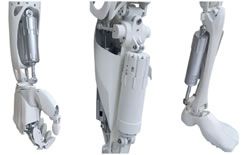
According to Goldman Sachs, the humanoid robot market is projected to reach $38 billion by 2035, with shipments surpassing 1.4 million units, driven by labor shortages and advancements in AI technology.
UBTECH Humanoid Robot Walker S2 Begins Mass Production and Delivery, with Orders Exceeding 800 Million Yuan
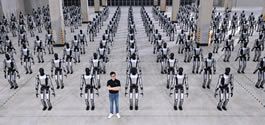
By establishing a closed-loop commercial cycle—from technology and real-world application to delivery and iterative improvement—UBTECH has developed core capabilities to rapidly address market demands and efficiently secure and fulfill orders
Humanoids - Safety Standards for the Next Wave of Robots
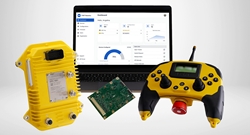
Today's safety concerns generally boil down to physical component and perception issues. If a robot is in a rugged environment, hardware components degrade and can lead to dangerous malfunctions.
Beyond the Humanoid Hype: Why Collaborative Mobile Robots Are the Real Factory Floor Revolution
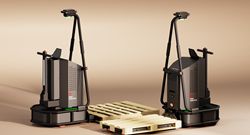
Collaborative mobile robots are already delivering measurable results for companies across a variety of industries, and they're fulfilling promises that the sci-fi-esque robots can only dream of one day tackling.
The Real Barrier to Trusting Robots? It Comes Down to Control
We're still a long way from the harmonious human-machine collaboration imagined in Isaac Asimov's stories. Getting there will require autonomous systems to perform reliably and safely, not just in controlled lab settings, but in messy, unpredictable real-world environments.
The Missing Interface: Designing Trust into a Robotic Future
The next era of robotics and AI won't be defined solely by technical breakthroughs but by how well these systems integrate into human environments. No matter how powerful the sensors or how technical the learning models are, without user trust, adoption will stall.
Why precision components, like thin-section bearings, will be crucial to making humanoid industrial robots work
For humanoid robots, size and weight are critical. The form factor must mimic human proportions while housing a complex network of sensors, motors and mechanical joints. This is where thin-section bearings prove essential.
Walker S2 - The World's First Humanoid Robot Capable of Autonomous Battery Swapping

Imagine a humanoid robot that walks as you do... and never stops working. The World's First Humanoid Robot Capable of Autonomous Battery Swapping. Meet UBTECH New Generation of Industrial Humanoid Robot Walker S2.
The Future of Work: How Humanoid Robots Will Revolutionize Industries

Advanced humanoid robots are not destined to replace human workers entirely. Instead, they are poised to revolutionize industries by complementing human skills and addressing critical labor shortages in hazardous environments.
Joint actuators: The fundamental component for humanoid robots' power and dexterity

Although there are structural similarities between humanoid robot joints and collaborative robot joints, there are still many differentiated requirements that pose higher performance demands.
Hexagon launches AEON, a humanoid built for industry
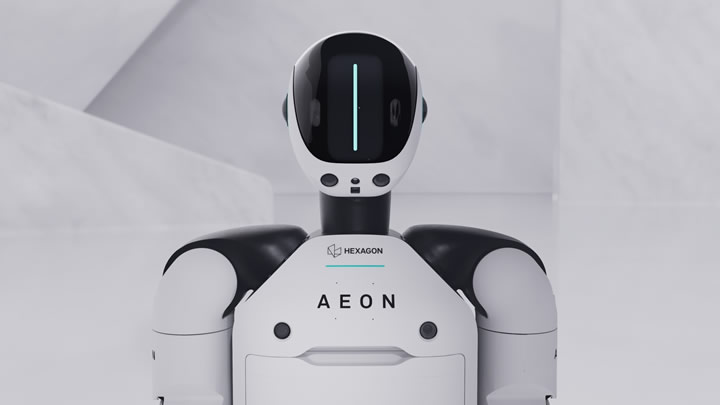
Hexagon leverages industry-leading expertise in measurement technologies, AI and autonomous systems to introduce an advanced humanoid robot to accelerate next-generation autonomy.
Rainbow Robotics to Unveil Next-Gen Humanoid Technologies at ICRA 2025, the World's Largest Robotics Conference
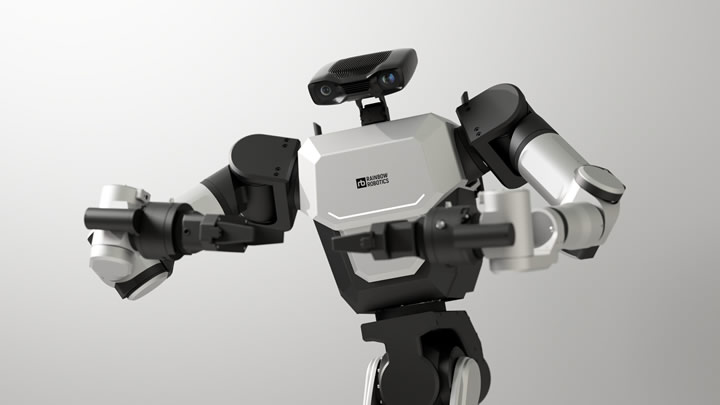
Designed to support a wide range of development environments, it provides open APIs and modular options, positioning it as a versatile research platform for AI and robotics software developers.
Are Humanoid Robots Coming Soon to the Construction Industry?
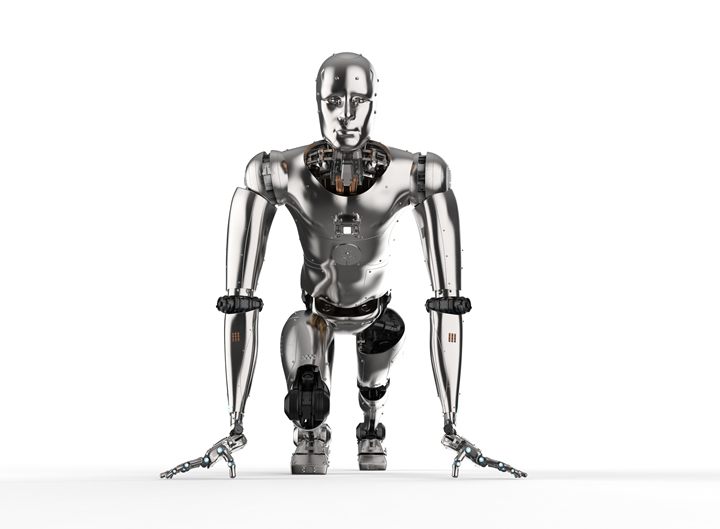
With major tech players investing heavily in this next generation of robotics, construction leaders are beginning to ask: could humanoid robots soon find a place in the industry. And, if so, what would that mean for workers, safety, and the economics of the job site?
Humanoid Robots: Large opportunity but limited uptake in the short- to mid-term
Our latest report explores the potential for humanoid robots through to 2032, examining the key barriers to entry currently limiting uptake, including regulations and safety standards, dexterity and productivity, battery life, price, and form-factors.
RobotLAB Unveils Breakthrough in Humanoid Robotics with Launch of BroBot™

Built to operate in dynamic and unpredictable environments, BroBot™ utilizes a hybrid analog-digital interface, autonomous task protocols, and situational awareness systems to perform essential duties with minimal supervision.
Records 1 to 15 of 30
Featured Product
Boston Dynamics Webinar - Why Humanoids Are the Future of Manufacturing
Join us November 18th for this Webinar as we reflect on what we've learned by observing factory floors, and why we've grown convinced that chasing generalization in manipulation—both in hardware and behavior—isn't just interesting, but necessary. We'll discuss AI research threads we're exploring at Boston Dynamics to push this mission forward, and highlight opportunities our field should collectively invest more in to turn the humanoid vision, and the reinvention of manufacturing, into a practical, economically viable product.
Robotics and Automation - Featured Company

PNY
PNY Professional Solutions provides customers with powerful tools to manage heavy workloads. PNY offers NVIDIA Professional, Consumer GeForce RTX, and Data Center GPU Solutions, along with PNY Memory upgrades and Solid-State Drives. All PNY products are designed and built with system integrators in mind to provide advanced application performance, top productivity, and greater power efficiency.