The Full Guide to Warehouse Automation
Warehouse automation proves to provide many benefits to the business owner and thus it leads in uplifting the warehouse industry in the most phenomenal way.
In a warehouse, we usually use different types of cases to store goods, for the most part, we rely on time-consuming manual operations to handle them. So to make these processes intelligent and efficient, robotics and ACR (Advanced Communications Riser) systems are the optimal solutions.
Organizations often have data sitting in various locations, this includes operational systems where the data isn't structured for reporting in excel or CSV or perhaps in the cloud. In some form, we need to get the data from these sources into our data warehouse where it is structured for reporting. This is done by writing code to extract data from the sources and loading it into a temporary location.
The data is then transformed into a format suitable for reporting. This process also includes quality control of your data called cleansing and also data integration. The data is then made available in the data warehouse structured in an optimum way for reporting purposes. This whole process is known in the industry as ELT or ETL which stands for extract, load and transform or extract, transfer and load respectively.
Before implementing data warehouse automation, it is necessary to have knowledge about the astonishing benefits that it offers.
Data warehouse automation accomplishes a number of objectives. For starters, it enables you to deliver data warehouses quickly and make incremental improvements. It accomplishes this by automating much of the design, build, and maintenance of your data warehouse, allowing the user to pull data from virtually any source or cloud-based platform and deploy new functionalities in days and weeks rather than months and years.
It also dramatically reduces development costs because all development using data warehouse automation is metadata-driven, requiring minimal coding. As a result, fewer ELT developers are required, and a high-quality solution can be delivered in a very short timeframe.
Another advantage is that the user's data warehouse platform will build the entire ELT process by combining metadata that describes the user's data warehouse with industry best practices design patterns, resulting in a high quality consistent, and error-free code with auto-generated documentation.
Featured Product
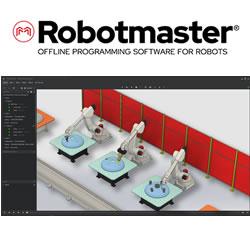
Robotmaster 2024
Program multi-robot cells and automatically solve robotic errors with ease. Hypertherm Associates announces a new version to its robotic programming software. Robotmaster 2024 addresses key market trends including the support for programming multiple robots in a single work cell and the demand for automatic trajectory optimization and robotic error correction.