Interview With West Virginia University: RASC-AL Competition
In this exciting competition, undergraduate and graduate students are invited to create a multi-disciplinary team to build a planetary rover prototype and demonstrate its capabilities to perform a series of competitive tasks in field tests at the NASA Johnson Space Centers Rock Yard in June 2013.
Interview With Worcester Polytechnic Insitute, "Team Oryx": RASC-AL Competition
In this exciting competition, undergraduate and graduate students are invited to create a multi-disciplinary team to build a planetary rover prototype and demonstrate its capabilities to perform a series of competitive tasks in field tests at the NASA Johnson Space Centers Rock Yard in June 2013.
Festo's BionicOpter Mechanical Dragonfly
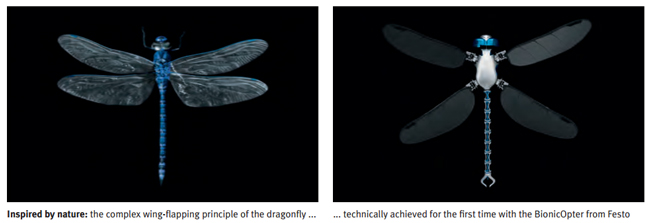
The mechanics of dragonfly flight are unique: dragonflies can manoeuvre in all directions, glide without having to beat their wings and hover in the air.
West Virginia University's Entry to 2013 RASC-AL Competition
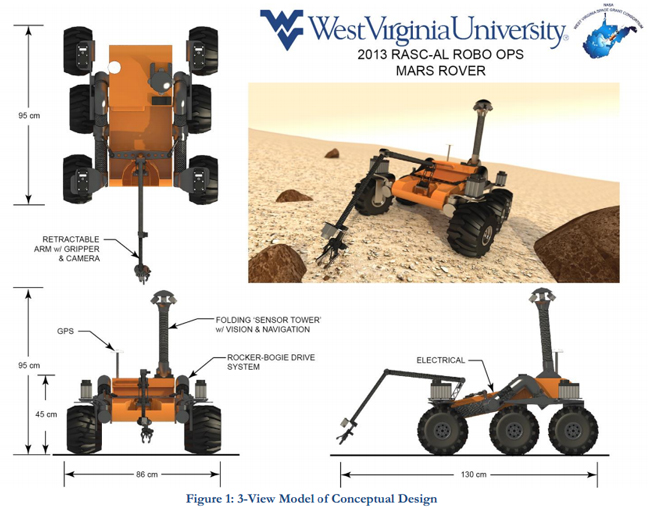
RASC-AL Exploration Robo-Ops Competition (i.e., Robo-Ops) is an engineering competition sponsored by NASA and organized by the National Institute of Aerospace. In this exciting competition, undergraduate and graduate students are invited to create a multi-disciplinary team to build a planetary rover prototype and demonstrate its capabilities to perform a series of competitive tasks in field tests at the NASA Johnson Space Centers Rock Yard in June 2013.
Worcester Polytechnic Institute's Entry to 2013 RASC-AL Competition
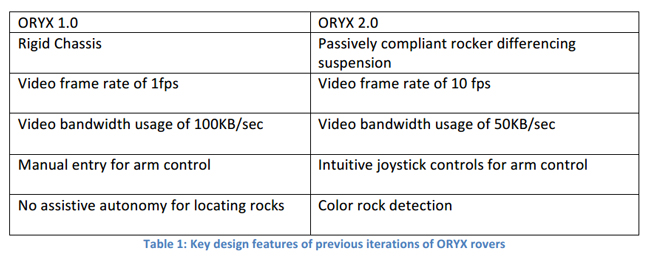
RASC-AL Exploration Robo-Ops Competition (i.e., Robo-Ops) is an engineering competition sponsored by NASA and organized by the National Institute of Aerospace. In this exciting competition, undergraduate and graduate students are invited to create a multi-disciplinary team to build a planetary rover prototype and demonstrate its capabilities to perform a series of competitive tasks in field tests at the NASA Johnson Space Centers Rock Yard in June 2013.
FAMU/FSU College of Engineering's Entry to 2013 RASC-AL Competition
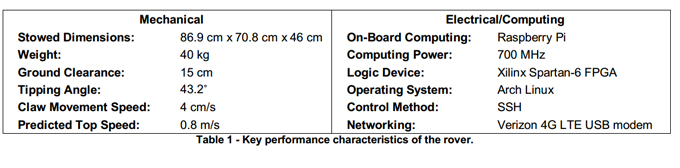
RASC-AL Exploration Robo-Ops Competition (i.e., Robo-Ops) is an engineering competition sponsored by NASA and organized by the National Institute of Aerospace. In this exciting competition, undergraduate and graduate students are invited to create a multi-disciplinary team to build a planetary rover prototype and demonstrate its capabilities to perform a series of competitive tasks in field tests at the NASA Johnson Space Centers Rock Yard in June 2013.
The RoboUtes' Entry to 2013 RASC-AL Competition
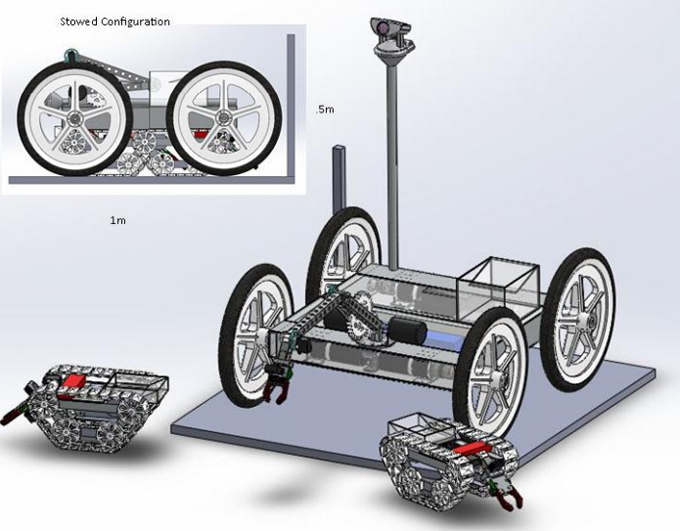
RASC-AL Exploration Robo-Ops Competition (i.e., Robo-Ops) is an engineering competition sponsored by NASA and organized by the National Institute of Aerospace. In this exciting competition, undergraduate and graduate students are invited to create a multi-disciplinary team to build a planetary rover prototype and demonstrate its capabilities to perform a series of competitive tasks in field tests at the NASA Johnson Space Centers Rock Yard in June 2013.
University of Nebraska-Lincoln's Entry to 2013 RASC-AL Competition
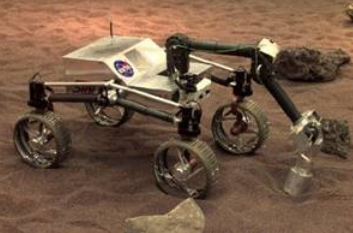
RASC-AL Exploration Robo-Ops Competition (i.e., Robo-Ops) is an engineering competition sponsored by NASA and organized by the National Institute of Aerospace. In this exciting competition, undergraduate and graduate students are invited to create a multi-disciplinary team to build a planetary rover prototype and demonstrate its capabilities to perform a series of competitive tasks in field tests at the NASA Johnson Space Centers Rock Yard in June 2013.
RASC-AL Exploration Robo-ops Competition
Robo-ops gives students an opportunity to engineer a solution to a future NASA mission and be a part of the NASA team. They get to compete and network with other students in their field and have fun while doing it all. NASA gets innovative ideas for its future missions and exposure to some brilliant talent that could soon be part of the NASA team. We all get smarter from this.
Robotic Integration For Assisted Movement
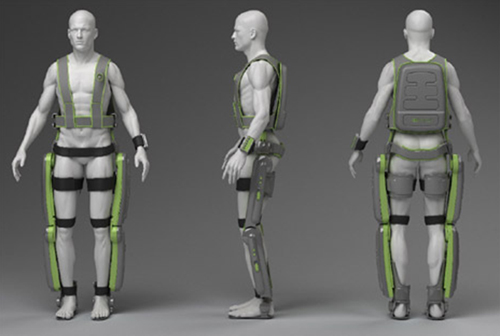
Powered exoskeletons have the potential to change battlefield technology forever. Paraplegic patients may leverage new technologies to walk again. Future exoskeletons will better integrate with humans, blurring the line between man and machine.
Industrial Robots with Image Processing in the Photovoltaic Industry
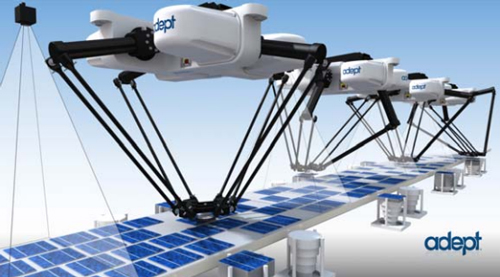
A 'seeing' robot can flexibly pick up, recognize and measure wafers, solar cells and even whole modules and then place the gripped objects with great precision and speed.
Robots in the Deep
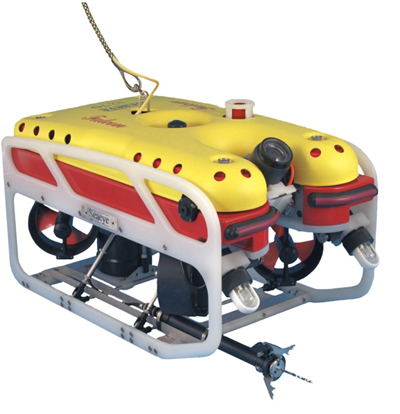
The oceans are unfathomable, dark and dangerous; yet researchers are building undersea robots that can find their way in the mysterious deep. Scientists now have a variety of research and work vehicles to explore where no man has gone before.
Interview - Unmanned Arial Vehicle (UAV) Tech
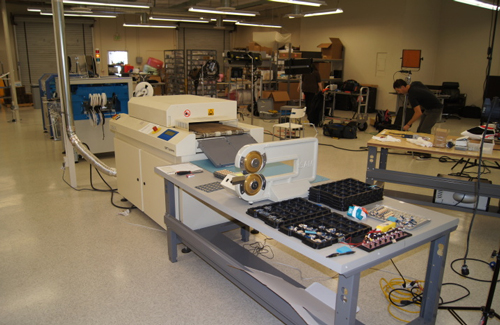
You can pretty much give UAVs any use you want, provided that you have enough imagination and patience to see that function come alive. Some of the most common uses right now and in the future will probably be related to photography, mapping, surveillance, surveying and any other activities that might involve risking human lives.
Records 31 to 43 of 43
Featured Product
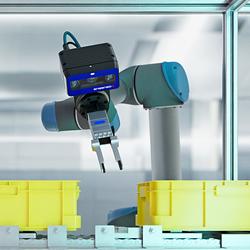
3D Vision: Ensenso B now also available as a mono version!
This compact 3D camera series combines a very short working distance, a large field of view and a high depth of field - perfect for bin picking applications. With its ability to capture multiple objects over a large area, it can help robots empty containers more efficiently. Now available from IDS Imaging Development Systems. In the color version of the Ensenso B, the stereo system is equipped with two RGB image sensors. This saves additional sensors and reduces installation space and hardware costs. Now, you can also choose your model to be equipped with two 5 MP mono sensors, achieving impressively high spatial precision. With enhanced sharpness and accuracy, you can tackle applications where absolute precision is essential. The great strength of the Ensenso B lies in the very precise detection of objects at close range. It offers a wide field of view and an impressively high depth of field. This means that the area in which an object is in focus is unusually large. At a distance of 30 centimetres between the camera and the object, the Z-accuracy is approx. 0.1 millimetres. The maximum working distance is 2 meters. This 3D camera series complies with protection class IP65/67 and is ideal for use in industrial environments.
Robotics and Automation - Featured Company

Encoder Products Company
At Encoder Products Company, we specialize in the encoders that provide you with motion feedback. EPC has been a leading designer and manufacturer of motion sensing devices for more than 50 years, we understand that each industrial automation application is different, and you need encoders that fit the needs of your applications. Our encoders are highly configurable, offer an array of shaft or bore sizes, output types, connector types, mounting options, and resolutions as high as 65,536 CPR.