The Need for Speed - Manufacturers Must Adapt Workers' Skills for Fast Covid-19 Recovery
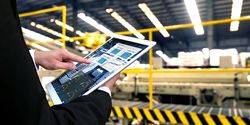
Low demand scenarios necessitate a different strategy: tools that can produce more pieces per edge while providing process security. Here, the goal should be fewer production interruptions and the capability to run unmanned production.
COVID-19 and Robotics: How the Past Year Transformed Automation
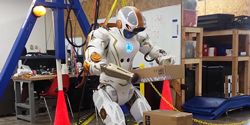
As life drastically changed and businesses were forced to operate in new ways, robots were not only leveraged to adapt to current circumstances, but to prepare for those to come.
Readers Choice 2020: Preparing to be Acquired: COVID-19 Has Inspired Small Manufacturers to Embrace Robotics
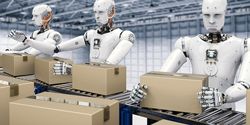
Every position is being assessed by small manufacturers. Jobs that can be replaced with robots make the company more attractive for a potential buyer.
COBOTS VS COVID: Today's Manufacturing Reality and Tomorrow's New Normal
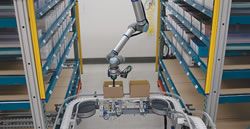
THIS WHITE PAPER discusses how manufacturers in many industries are leveraging collaborative robots (cobots) to create safe zones for workers returning to production lines.
Coval introduces a vacuum chamber for gripping protective masks
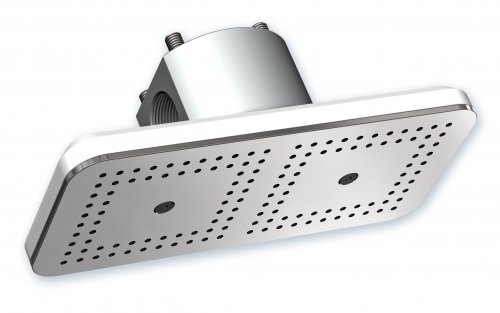
Coval's CVGM series mini vacuum chamber is designed to handle light and porous objects, such as protective masks, but also fabric or leather cut-outs.
The Industrial Robotics Industry: Is Reemergence of the Industry on the Cards Post the COVID-19 Pandemic Settles?
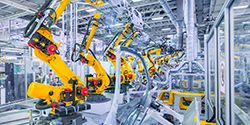
With the emergence of the COVID-19 pandemic, the entire world came to a screeching halt. The industrial robotics market also experienced a drastic downfall. However, the industry is expected to regain its grasp by 2022, looking at the increasing demand for industrial robots.
CDC Awards $1.5 Million for Research to Reduce Exposures to Workplace Hazards through Robotic Technology
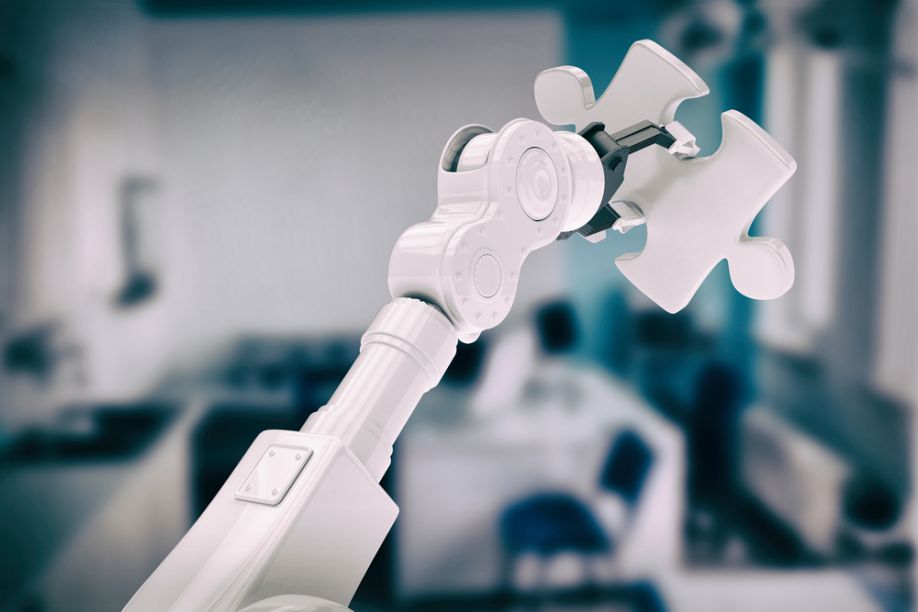
The Initiative supports research in the U.S. that will accelerate the development and use of co-robots, an emerging robotic technology that complements, not replaces, human workers.
Global impact of Covid-19 on Autonomous Last Mile Delivery Market

With the breakthrough in vaccination and when situation is under control, last mile delivery will certainly not look the same, as the companies are preparing for innovation shift post lift of the restrictions to rapidly assess and adapt their supply chains.
RoboticsTomorrow - Fall Product Special - Part 2

It has been over 6 months without any in person events. With that in mind we are putting together a special feature article for the fall to highlight some of the new products and services our partners have rolled out during that time. Part 2.
The Future of Manufacturing: What to Expect
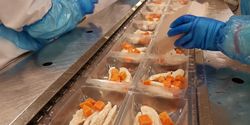
As we move toward a new normal, robots may play a big role in helping businesses recover in the post-COVID world. Three automation experts weigh in on these trends and how COVID-19 is impacting key industry segments.
RoboticsTomorrow - Fall Product Special - Part 1

It has been over 6 months without any in person events. With that in mind we are putting together a special feature article for the fall to highlight some of the new products and services our partners have rolled out during that time. Part 1.
How Robotic Technology Can Mitigate COVID-19

No matter how expertly designed or rigorously tested, every robot is bound to encounter edge cases at some point or another. How the issues are handled and how field ops are done, determines the longevity of the robot system or product.
Covid-19: Drive Technology and Physical Distancing
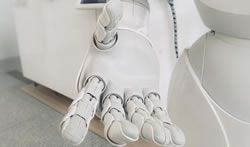
The sanitary crisis linked to the diffusion of Covid-19 requires everyone to apply measures of social distancing. Motorized and automated solutions are being developed at high speed as a solution.
5 Ways COVID-19 Could Benefit the Robotics Market

The novel coronavirus pandemic hit many industries hard, leaving analysts unsure of when things might bounce back for those sectors. However, the combination of the robotics industry and COVID-19 could be beneficial. Here are five reasons why.
Thoughts on the Impact of COVID-19 and Essential Supply Chain Automation
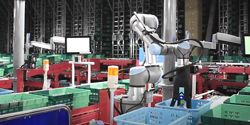
It is clear to everyone in the supply chain industry that piece-picking technology is an essential core solution that enables predictable and scalable order fulfillment operations, especially during times like these.
Records 1 to 15 of 25
Featured Product
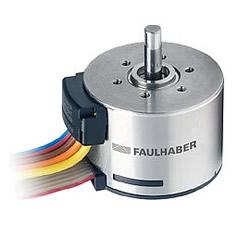
New incremental encoder IERF3 L from FAULHABER
FAULHABER is expanding its product range with the ultra-precise incremental encoder IERF3 L. Thanks to the optical measuring principle and state-of-the-art chip technology, the device offers the highest resolution, excellent repeatability, and outstanding signal quality. In typical applications, the positioning accuracy is 0.1° and the repeatability 0.007°. This makes the encoder the perfect solution for high-precision positioning applications in confined spaces.
Robotics and Automation - Featured Company

OnLogic
A global industrial PC manufacturer and solution provider focused on hardware for the IoT edge, OnLogic designs highly-configurable computers engineered for reliability. Their systems operate in the harshest environments and power innovation in the evolving Internet of Things. Founded in 2003 as Logic Supply, the company has served more than 70,000 customers. OnLogic has offices in the US, Netherlands, Taiwan and Malaysia.